Uncategorized

freelance video editor
Uncategorized

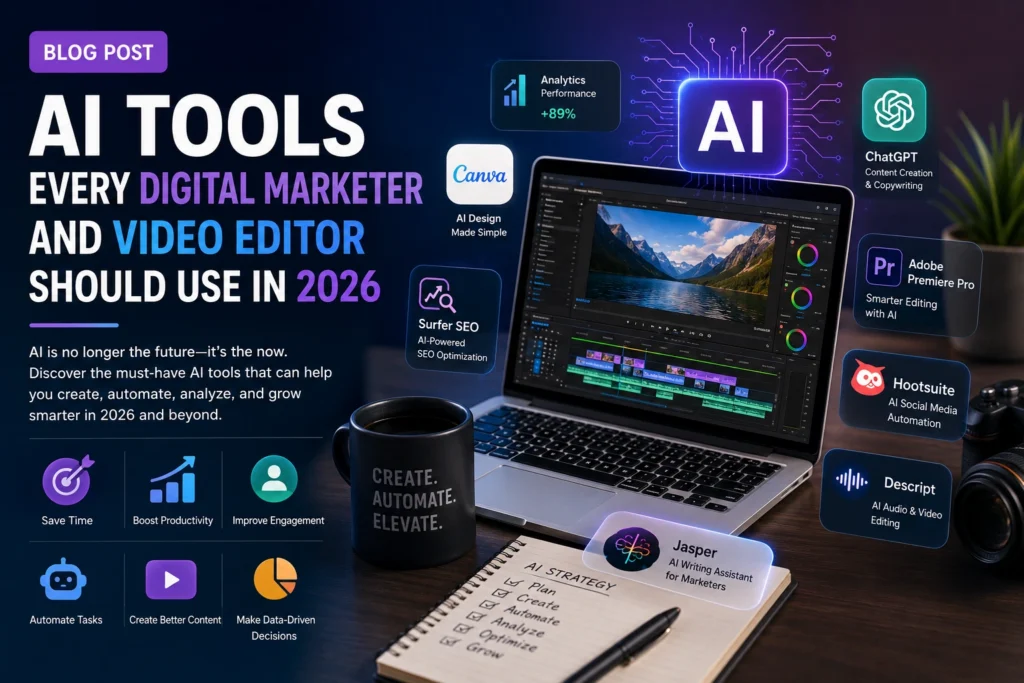
AI Tools Every Digital Marketer and Video Editor Should Use in 2026

Introduction: The Rise of AI in Modern Marketing and freelance video editor Artificial intelligence has transformed the digital world at an extraordinary pace. In 2026, businesses, marketers, and content creators increasingly depend on AI-powered tools to improve productivity, automate workflows, and create high-quality content efficiently. As competition grows across online platforms, professionals must adopt smarter technologies to remain relevant and competitive in the industry. Moreover, digital marketing and video editing now require faster production cycles, stronger audience engagement, and more personalized experiences. Traditional methods alone no longer provide enough speed or efficiency to meet modern consumer expectations. Although traditional advertising still plays an important role in certain industries, AI-driven solutions now dominate modern marketing strategies because they deliver better targeting, automation, and performance analysis. The Evolution of Digital Marketing in the AI Era Digital marketing has changed significantly over the last few years. Previously, marketers relied heavily on manual research, repetitive content creation, and traditional advertising campaigns to promote products and services. However, AI tools now simplify these processes by automating tasks and improving decision-making through advanced analytics. Furthermore, businesses can now analyze customer behavior more accurately than ever before. AI systems process large amounts of data quickly, helping marketers identify trends, audience preferences, and engagement opportunities. As a result, companies create more effective campaigns while saving valuable time and resources. Why AI Tools Matter for Video Editors Video editing has also experienced a major transformation due to artificial intelligence. Editors previously spent countless hours cutting footage, syncing audio, adding captions, and organizing timelines manually. Today, AI-powered editing tools perform many of these tasks automatically, significantly improving workflow efficiency. Additionally, AI helps editors produce professional-quality videos faster without sacrificing creativity. Features such as automatic scene detection, background noise removal, color correction, and AI-generated subtitles streamline production processes. Consequently, video editors can focus more on storytelling and creative direction instead of repetitive technical tasks. ChatGPT: Revolutionizing Content Creation One of the most powerful AI tools in 2026 is OpenAI’s ChatGPT. Digital marketers use this platform to generate blog ideas, write social media captions, create email campaigns, and develop marketing strategies efficiently. Since content creation remains a core component of digital marketing, AI writing assistants significantly improve productivity. Moreover, ChatGPT helps businesses maintain consistent communication with audiences across multiple platforms. Marketers can generate SEO-friendly content, improve brand messaging, and create engaging promotional copy quickly. While traditional advertising often requires large creative teams and extended production timelines, AI writing tools simplify content development for businesses of all sizes. Canva AI: Simplifying Graphic Design Visual content continues to dominate digital platforms, making graphic design an essential skill for marketers and creators. Canva has introduced advanced AI features that allow users to create professional graphics, presentations, advertisements, and social media posts efficiently. Additionally, Canva AI simplifies design processes for beginners and professionals alike. Users can generate templates, remove backgrounds, resize visuals, and create branded designs within minutes. Consequently, businesses improve their online presence without investing heavily in complex design software or expensive creative agencies. Adobe Premiere Pro AI Features Enhance Video Editing Professional video editors increasingly rely on Adobe’s Adobe Premiere Pro because of its advanced AI-powered features. The software now includes automatic editing suggestions, speech-to-text captioning, scene editing assistance, and intelligent audio enhancement tools. Furthermore, AI capabilities within Premiere Pro reduce editing time dramatically. Editors can organize footage faster, improve audio quality automatically, and generate captions instantly for social media content. Since short-form videos dominate digital platforms, these AI-powered features help creators meet growing content demands efficiently. AI-Powered SEO Tools Improve Search Rankings Search engine optimization remains a critical aspect of digital marketing in 2026. AI-powered SEO tools help marketers analyze keywords, optimize website content, and improve search engine visibility more effectively than traditional methods. Platforms such as Semrush and Ahrefs use artificial intelligence to provide keyword insights, competitor analysis, and content optimization recommendations. Consequently, businesses can create highly targeted marketing campaigns that attract organic traffic and improve online visibility. Social Media Automation Tools Increase Efficiency Managing multiple social media accounts manually can become overwhelming for businesses and content creators. Therefore, AI-powered automation tools now play a major role in scheduling posts, analyzing engagement, and managing audience interactions efficiently. Platforms like Hootsuite and Buffer use AI to recommend posting times, generate performance insights, and automate repetitive tasks. As a result, marketers save time while maintaining consistent online activity across platforms. AI Voice Generators and Audio Tools Transform Content Creation Audio quality significantly influences audience engagement, especially in video content and podcasts. AI-powered voice generators and audio enhancement tools now help creators produce professional-quality sound without expensive studio equipment. For example, Adobe offers AI audio enhancement features that remove background noise and improve voice clarity automatically. Similarly, AI voice-generation platforms allow creators to produce realistic voiceovers for videos, advertisements, and educational content efficiently. Consequently, businesses improve production quality while reducing operational costs. AI Analytics Tools Strengthen Marketing Decisions Data-driven marketing has become essential in the digital era. AI analytics platforms help businesses track performance metrics, identify customer behavior patterns, and optimize campaigns based on real-time data. Additionally, marketers can now predict trends and audience preferences more accurately using AI-powered insights. Unlike traditional advertising, which often provides limited measurable data, digital AI tools offer detailed analytics regarding engagement, conversions, and customer interactions. Therefore, businesses can improve marketing strategies continuously and achieve better return on investment. The Relationship Between AI and Traditional Advertising Although AI dominates modern marketing, traditional advertising still maintains value in certain areas. Television commercials, radio promotions, and billboard campaigns continue reaching specific demographics effectively. However, businesses increasingly combine AI-driven marketing with traditional advertising strategies to maximize audience reach. Furthermore, AI tools now improve traditional advertising by providing better audience targeting and campaign analysis. Companies can use artificial intelligence to understand consumer behavior and personalize advertisements more effectively. Consequently, AI does not completely replace traditional advertising; instead, it enhances its effectiveness within integrated marketing strategies. Ethical Considerations and Human Creativity Despite the growing influence of AI, human creativity remains essential in digital marketing

Social Media Marketing Expert
Uncategorized

5 Mistakes Small Businesses Make in Social Media Marketing Expert

Introduction: Why Social Media Marketing Expert Matters More Than Ever In today’s digital world, social media marketing has become an essential part of business growth. Small businesses now use platforms such as Instagram, Facebook, and LinkedIn to connect with customers, promote products, and build strong brand awareness. However, despite the growing opportunities, many businesses still struggle to achieve meaningful results because they repeat avoidable marketing mistakes. Although companies invest time and money into online promotion, poor strategy often reduces engagement and limits growth. Furthermore, some businesses still rely heavily on traditional advertising without adapting to modern consumer behavior. As a result, they fail to connect with audiences who spend most of their time on digital platforms. Therefore, understanding the most common mistakes in social media marketing can help businesses improve performance and achieve long-term success. Mistake 1: Ignoring a Clear Social Media Strategy Many small businesses start posting content without developing a clear marketing strategy. They upload random images, promotional posts, or videos without identifying goals, target audiences, or content direction. Consequently, their social media pages appear inconsistent and unprofessional. A successful social media strategy requires careful planning and brand positioning. Businesses should define objectives such as increasing engagement, generating leads, improving customer relationships, or driving website traffic. Additionally, companies must understand their audience preferences before creating content. Without a proper strategy, businesses waste valuable resources and fail to compete effectively against brands with structured digital marketing plans. The Difference Between Strategy and Random Posting Some businesses believe frequent posting automatically guarantees success. However, quantity alone does not create engagement. Instead, quality content combined with a strong strategy produces better marketing results. Businesses must create content that solves problems, entertains audiences, or provides useful information. Moreover, companies should maintain consistency in tone, design, and messaging. A well-planned strategy builds trust and improves brand recognition over time. While traditional advertising focuses mainly on broad exposure, modern social media marketing requires personalization and audience interaction to remain effective. Mistake 2: Overusing Promotional Content Another major mistake involves posting excessive promotional material. Many businesses constantly advertise products, discounts, and services without providing valuable or engaging content. Consequently, audiences lose interest and stop interacting with the brand. Social media users prefer authentic and informative content rather than continuous sales messages. Therefore, businesses should balance promotional posts with educational, entertaining, or inspirational content. For example, brands can share behind-the-scenes videos, customer stories, tutorials, or industry insights to create stronger audience connections. Why Value-Driven Content Builds Trust Value-driven content encourages audiences to engage naturally with a business. Instead of forcing sales, businesses can attract potential customers by demonstrating expertise and authenticity. As a result, audiences develop trust and become more likely to purchase products or services later. Additionally, social media platforms reward engaging content with greater visibility. Posts that receive comments, shares, and saves often reach larger audiences organically. Unlike traditional advertising, which depends heavily on direct promotion, social media marketing succeeds when businesses focus on relationships rather than constant selling. Mistake 3: Neglecting Audience Engagement Many small businesses treat social media as a one-way communication channel. They publish content regularly but ignore comments, messages, and customer interactions. Consequently, followers may feel undervalued and disconnected from the brand. Audience engagement plays a critical role in building customer loyalty and trust. Businesses should actively respond to comments, answer questions, and acknowledge feedback promptly. Moreover, interactive activities such as polls, live sessions, and Q&A discussions help businesses create stronger relationships with their audience. How Engagement Strengthens Brand Loyalty When businesses engage consistently with followers, they create a sense of community around their brand. Customers appreciate businesses that listen and communicate actively. Therefore, engagement increases customer satisfaction and encourages repeat business. Furthermore, social media algorithms often prioritize content with higher engagement levels. This means businesses that interact with their audience gain better visibility and reach more potential customers. While traditional advertising delivers messages to audiences passively, social media marketing thrives through active communication and relationship-building. Mistake 4: Failing to Invest in High-Quality Visual Content Visual content significantly influences audience perception in digital marketing. Unfortunately, many small businesses use low-quality images, poorly edited videos, or inconsistent branding across their social media platforms. As a result, their business appears less credible and less professional. High-quality visuals attract attention and improve audience retention. Businesses should invest in professional photography, creative graphic design, and engaging video editing to enhance content quality. Additionally, consistent branding elements such as colors, fonts, and logos help businesses create a recognizable online identity. Why Visual Storytelling Matters in Modern Marketing Modern audiences consume content quickly, especially on mobile devices. Therefore, visually appealing content immediately captures attention and increases engagement. Short-form videos, animations, and branded graphics perform exceptionally well because they communicate messages effectively within seconds. Moreover, strong visual storytelling creates emotional connections with audiences. Businesses can use visuals to showcase brand values, customer experiences, and product benefits creatively. Compared to traditional advertising, which often relies on static messaging, social media marketing allows brands to communicate through dynamic and interactive visuals. Mistake 5: Ignoring Analytics and Performance Tracking One of the most damaging mistakes small businesses make involves ignoring social media analytics. Many companies post content consistently but never analyze performance metrics such as engagement rates, reach, watch time, or audience behavior. Consequently, they continue repeating ineffective strategies without improvement. Analytics provide valuable insights that help businesses optimize their marketing efforts. Companies can identify which content performs best, understand audience preferences, and improve future campaigns accordingly. Therefore, data-driven decisions significantly increase the effectiveness of social media marketing strategies. The Power of Data in Digital Marketing Performance tracking enables businesses to measure return on investment accurately. Unlike traditional advertising, which often provides limited measurable data, social media platforms offer detailed analytics in real time. Businesses can monitor clicks, conversions, impressions, and audience interactions instantly. Additionally, analytics help businesses refine content strategies based on actual user behavior rather than assumptions. Companies that use data effectively can improve targeting, increase engagement, and achieve better marketing results over time. Consequently, analytics have

SEO marketing
Uncategorized

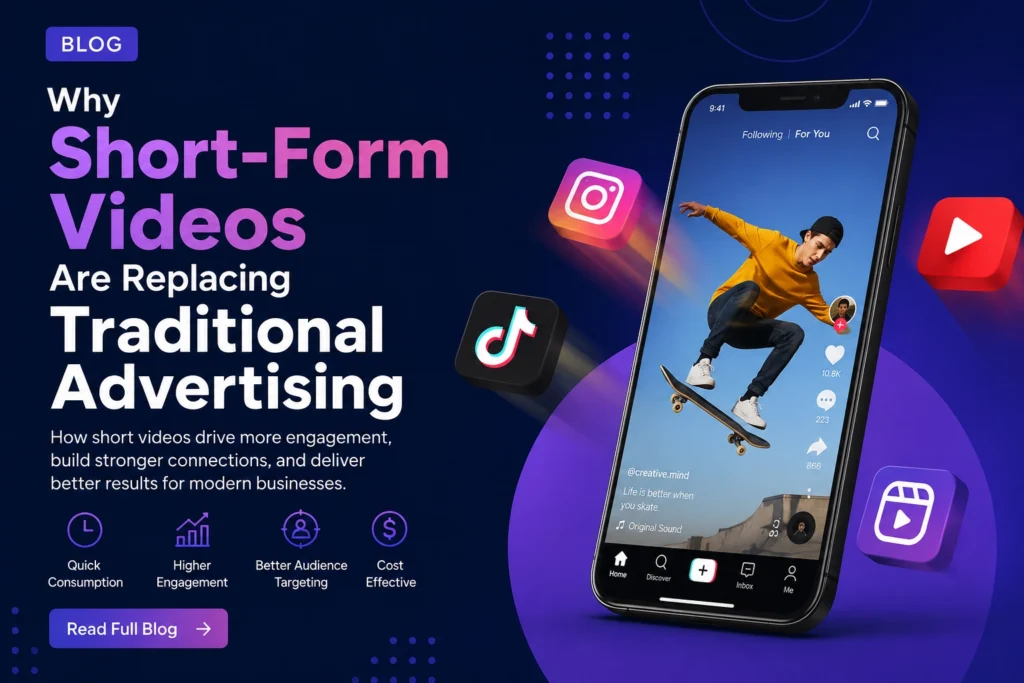
Why Short-Form Videos Are Replacing Traditional Advertising in the Digital Era

Introduction: The Shift That Is Transforming Modern SEO Marketing The marketing industry has experienced a dramatic transformation over the last decade. Businesses no longer rely solely on television commercials, newspaper promotions, radio campaigns, or billboard placements to reach their audience. Instead, brands now focus heavily on short-form video content because it delivers faster engagement, higher visibility, and stronger audience interaction. As consumer behavior continues to evolve, companies increasingly move away from traditional advertising and embrace modern digital strategies. Moreover, platforms such as Instagram, TikTok, and YouTube have revolutionized how audiences consume content online. People now prefer quick, entertaining, and informative videos instead of lengthy promotional campaigns. Consequently, brands that adapt to this trend gain a competitive advantage in the digital marketplace. The Decline of Traditional Advertising For many years, traditional advertising dominated the marketing industry. Television commercials, magazine advertisements, radio broadcasts, and newspaper promotions represented the primary methods companies used to communicate with consumers. However, the effectiveness of these methods has gradually declined because audience preferences have changed significantly. Today, consumers spend more time on smartphones and social media platforms than watching television or reading print media. As a result, businesses struggle to maintain engagement through traditional advertising channels. Furthermore, traditional campaigns often require large budgets while delivering limited interaction and measurable results. In contrast, short-form videos offer greater flexibility, faster production, and more precise audience targeting. The Rise of Short-Form Video Content Short-form videos have rapidly become one of the most powerful tools in digital marketing. These videos usually range from a few seconds to one minute, allowing brands to capture attention almost instantly. Since modern audiences prefer fast and engaging content, businesses increasingly prioritize short-form videos in their marketing strategies. Additionally, social media algorithms strongly favor video-based content because videos generate higher user engagement. Platforms continuously promote reels, shorts, and quick video clips to maximize user retention. Therefore, businesses that invest in short-form video marketing often experience increased visibility, stronger audience reach, and improved brand awareness compared to those relying on traditional advertising. Consumer Attention Spans Are Becoming Shorter Modern consumers process information differently than previous generations. Due to the overwhelming amount of digital content available online, people now make decisions quickly and scroll through information rapidly. Consequently, marketers must deliver their message within seconds to maintain audience interest. Short-form videos successfully address this challenge because they communicate information quickly and effectively. Instead of presenting lengthy explanations, brands use creative visuals, dynamic editing, captions, and storytelling techniques to capture attention immediately. Traditional advertising, on the other hand, often requires longer viewing times and fails to maintain audience engagement in today’s fast-paced digital environment. Social Media Platforms Encourage Video Consumption Social media platforms play a critical role in the growing dominance of short-form video content. Companies such as Meta and Google continuously update their algorithms to prioritize engaging video experiences for users. As a result, creators and brands receive greater organic reach when they publish short-form videos. Furthermore, social media users actively interact with videos by liking, commenting, sharing, and saving content. This level of engagement rarely occurs with traditional advertising methods such as print ads or television commercials. Therefore, businesses recognize that short-form videos not only attract attention but also encourage direct communication with potential customers. Short-Form Videos Deliver Higher Engagement Rates Engagement has become one of the most important metrics in modern marketing. Businesses no longer focus solely on views or impressions; instead, they aim to create meaningful interactions with their audience. Short-form videos excel in this area because they combine entertainment, storytelling, and visual creativity within a limited timeframe. Moreover, viewers often watch short videos multiple times, especially when the content includes catchy music, fast editing, or emotional storytelling. This repeated exposure strengthens brand recall and increases the likelihood of customer conversion. In comparison, traditional advertising often struggles to maintain the same level of interaction and emotional connection. Cost-Effectiveness Gives Businesses a Major Advantage One of the biggest reasons companies prefer short-form videos over traditional advertising involves cost efficiency. Producing television commercials, billboard campaigns, or magazine advertisements usually requires significant financial investment. Small businesses and startups often cannot afford these expensive marketing methods. In contrast, short-form video content allows businesses to create impactful campaigns with minimal resources. A smartphone, editing software, and creative storytelling can produce highly effective marketing content. Consequently, even small brands can compete with larger companies in the digital marketplace. This accessibility has transformed the advertising industry and created new opportunities for entrepreneurs and content creators. Data Analytics Improve Marketing Performance Traditional advertising provides limited performance tracking because marketers cannot accurately measure audience reactions in real time. Businesses may know how many people watched a television channel or purchased a newspaper, but they often struggle to determine actual engagement and conversion rates. However, short-form video platforms provide detailed analytics that help businesses optimize their marketing strategies. Marketers can monitor watch time, audience retention, click-through rates, shares, comments, and conversions instantly. Therefore, companies can improve future campaigns based on accurate performance data. This analytical advantage makes short-form videos far more effective than traditional advertising methods. Creativity and Storytelling Drive Emotional Connection Modern audiences value authenticity and emotional storytelling more than direct promotional messaging. Short-form videos allow brands to present relatable stories, behind-the-scenes content, customer experiences, and entertaining narratives in a highly engaging format. Additionally, creative editing techniques such as transitions, captions, sound effects, and motion graphics make videos visually appealing. These elements help brands establish stronger emotional connections with viewers. Traditional advertising often appears overly scripted or excessively promotional, whereas short-form videos feel more personal and relatable to modern audiences. Influencer Marketing Supports the Growth of Short Videos Influencer marketing has significantly contributed to the popularity of short-form videos. Social media influencers create authentic content that audiences trust more than conventional advertisements. As a result, brands collaborate with creators to promote products through reels, shorts, and trending video formats. Furthermore, influencer-driven campaigns often generate stronger audience engagement because viewers perceive recommendations as genuine rather than corporate promotions. Traditional advertising lacks this level of

Scroll to Top